
Cleavers: The Velcro Healer
Taxonomy/Botanical Classification:
Family: Rubiaceae
Genus: Galium
Species: G. aparine
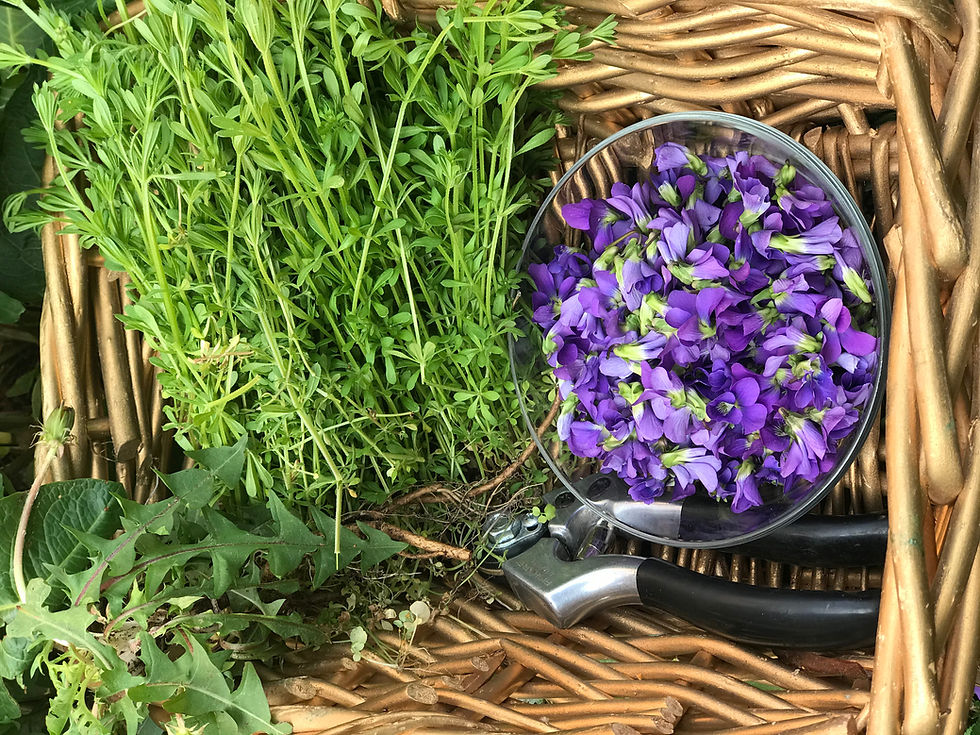
Cleavers (Galium aparine) is a green wanderer known by many names across the diaspora. Sticky Willy, aka Robin-Run-The-Hedge and bka Catchweed roots itself among continents and cultures with gentle determination. Native to North Africa, Asia, and Europe, it has since meandered far and wide, naturalizing itself in the temperate folds of North America, Australia, and beyond. This plant knows how to make itself at home—favoring the moist nooks of shaded forests, hedgerows, and riverbanks, yet just as willing to burst from disturbed soil with vigor. I’m always sweetly surprised to find these little velcro babies in the most unsuspecting places where my puppy sniffs along our walks, offering a reminder of resilience and return.
Quadrangular stems that sprawl across the landscape, Cleavers clings gently to the world around it. Its leaves, small and lanceolate, form whorled halos of six to nine, cradling the plant’s delicate, white, cross-shaped blossoms that present in loose and quiet clusters. At summer’s end, globe like fruits appear, donned with hooked bristles designed to travel—to easily hitch a ride on passing fur, clothes, or skin, spreading its medicine wherever it may roam. This little hitchhiker is playful to the touch with its sticky, unforgettable velcro-like texture. Not to be confused with her kin— the smoother Galium mollugo or the sweet-scented Galium odoratum. Revered across generations by Indigenous communities, folk healers, and traditional herbalists, Cleavers has long been called upon for her diuretic, lymph-moving, and detoxifying gifts. She doesn’t force healing—she coaxes it gently, moving what must be moved, loosening what must be released, and always returning us to the wisdom of flow.
Cleavers is a generous self-sower, eager to grow when given the chance and the right conditions. Propagation is simple—she thrives when sown directly from seed, either in the awakening of early spring or the slow descent of late autumn. Cleavers is a lover of dappled light, flourishing best in partial to full shade, where the forest canopy or garden fence offers a gentle veil against the sun. True to her nature, she thrives in damp spaces, drawing vitality from the cool, moist environments she calls home. Cleavers arrives like a seasonal offering, growing in rhythm with the earth’s natural cycle, never asking for much—just a soft place to root and a little water to remember her medicine. The plant is adapted to temperate regions with mild winters and will settle in to stay if she likes the environment. She asks for so little yet gives soo much as hardy companion in the garden. Beware, she may require a thinning out if you don't want it to spread where she's taken root.
Cleavers rarely falls prey to pests, but is prone to a touch of mildew if her space is cluttered. In airy wild gardens and balanced permaculture plots, Cleavers thrives with minimal fuss, weaving herself into the landscape like she was always meant to be there. When it comes time to harvest, the young, tender aerial parts should be gathered before flowering, when her medicine is most vibrant and vital. Freshly harvested Cleavers is ideal for juicing or crafting tinctures. Her magic sings sweetest when fresh from the earth but can be dried if done so swiftly in a shaded, well-ventilated space.
Key Chemical Constituents & Actions
Flavonoids, iridoids, polyphenols, citric acid, tannins, coumarins.
Pharmacognosy:
Cooling, moistening properties.
Diuretic and lymphatic-stimulating effects.
Herbal Actions:
Lymphatic tonic – Stimulates lymph movement.
Diuretic – Promotes urination.
Alterative – Supports detoxification.
Anti-inflammatory – Soothes irritated tissues.
Vulnerary – Speeds wound healing.
Tissue States & Energetics:
Cooling and moistening.
Best suited for hot, inflamed, stagnant conditions.
Traditional Uses:
Historically used to support kidney and lymphatic health.
Employed in topical applications for burns and wounds.
Indications:
Swollen lymph nodes
Urinary tract infections
Water retention and cellulite
Eczema, psoriasis, and minor wounds
Taste & Actions:
Taste: Saline
Actions: Diuretic, cooling, detoxifying
Organ/System Affinities:
Lymphatic system
Kidneys and urinary tract
Skin
Administration & Preparation:
Cold Infusion: Soak fresh plant in water overnight; drink as a detox tea.
Tisane: Steep 1-2 tsp dried Cleavers in hot water for 10 minutes.
Tincture: 1:2 ratio with alcohol; take 1-3ml three times daily.
Fresh Juice: Blend with water, strain, and drink 5-10ml up to three times daily.
Topical Use: Infused oil or fresh juice applied to irritated skin.
Sustainability & Ethical Considerations
Conservation Status:
Not currently endangered but can become invasive in non-native regions.
Sustainable Harvesting:
Wild harvest in moderation, ensuring plant regeneration.
Cultivation encouraged to prevent overharvesting from the wild.
Safety Information:
Not recommended for individuals on prescription diuretics.
Those with severe kidney disease should consult a healthcare provider before use.
Research Findings:
Studies confirm its lymphatic-stimulating and diuretic properties.
Traditional use aligns with modern herbalist findings on detoxification benefits.
My Favorite Recipe:
Cleavers Spring Tonic
1 handful fresh Cleavers
1 lemon, sliced
1 liter cold water
Let steep overnight in the refrigerator; drink in the morning for a gentle detox.
Sometimes big medicine comes in the form of a small plant. Cleavers is one of those plants—humble and unassuming, yet potent and highly useful. It’s like a water purifier for your body, it’s the gentle ones that quietly restore balance from within. Nature knows how to take out the trash, and Cleavers is proof of that. This sticky spring green shows up just in time to help the body shake off winter’s sluggishness. The way it clings to our hands is the same way it latches onto toxins, water retention, and metabolic waste in the body—removing what no longer serves you.
As Emma Dupree, the wise medicine woman of North Carolina, mused, “The plants we need grow right where we are.” Cleavers is a living testament to this.
References
Harold Ward, Herbal Manual
Michael Moore, Clinical Herb Manuals
Herbal Remedies Advice, “The Cleavers Herb”

This content is not meant to diagnose, treat, cure, or prevent any disease, and it sure doesn’t replace the care, advice, or guidance of a qualified healthcare provider. Got medical concerns? Respectfully — talk to your doctor, herbalist, or trusted health practitioner.
We honor the legacy of plant medicine, and we believe in bridging ancestral wisdom with modern safety. So please — do your own research, listen to your body, and stay grounded in discernment.


Comments